
Swedish Black Licorice: The Complete Guide
Swedish black licorice is a candy made from licorice root extract (Glycyrrhiza glabra), combined with sugar, wheat starch or potato starch, and often ammonium chloride, known in Scandinavia as salmiak, to produce a bold, complex, intensely savory flavor unlike anything sold under the name "licorice" in American supermarkets. It is the most consumed candy in Sweden, and the defining sweet of Nordic culture.
Unlike the artificially flavored red and black twists familiar to most Americans, real Swedish black licorice contains actual licorice root extract. That single difference changes everything: the flavor is earthy, slightly bitter, deeply aromatic, and ranges from gently sweet to aggressively salty depending on the style. If you have only ever tried American licorice, you have not yet tried licorice.
This guide covers everything you need to know about Swedish black licorice: what it is, how it is made, why Swedes are obsessed with it, and how to find your place on the spectrum, from first-time curious to full salmiak convert.

How Swedish Black Licorice Differs from American Licorice
The single biggest difference is the ingredient list. American black licorice, brands like Twizzlers Black, Red Vines Black, and Good & Plenty, uses anise oil or artificial licorice flavoring to approximate the taste of real licorice root. Swedish black licorice uses the real thing: extract from the root of the Glycyrrhiza glabra plant, which is native to the Mediterranean and parts of Asia.
The flavour difference is significant. Anise oil is brighter, sharper, and one-dimensional, it tastes like what you expect licorice to taste like from a distance. Real licorice root extract has a deep, bittersweet earthiness with subtle complexity: slightly smoky, faintly medicinal, and with a natural sweetness (glycyrrhizin, the active compound in licorice root, is approximately 50 times sweeter than sugar by weight).
Swedish black licorice also has a different texture. American licorice tends to be chewy and pliable. Swedish licorice ranges from soft and gummy to firm and dense, often with a slightly waxy or matte surface. Some varieties, like the iconic Svenska Bastards, have a powdered or crystalline exterior from salmiak coating.
And then there is salmiak. Swedish licorice frequently contains ammonium chloride, which creates the distinctive sharp, salty, almost chemically intense edge that defines Nordic licorice culture. There is no equivalent in American candy. Nothing in the American candy aisle prepares you for it, which is partly why it is so memorable.
Read the full comparison: Swedish Licorice vs. American Licorice
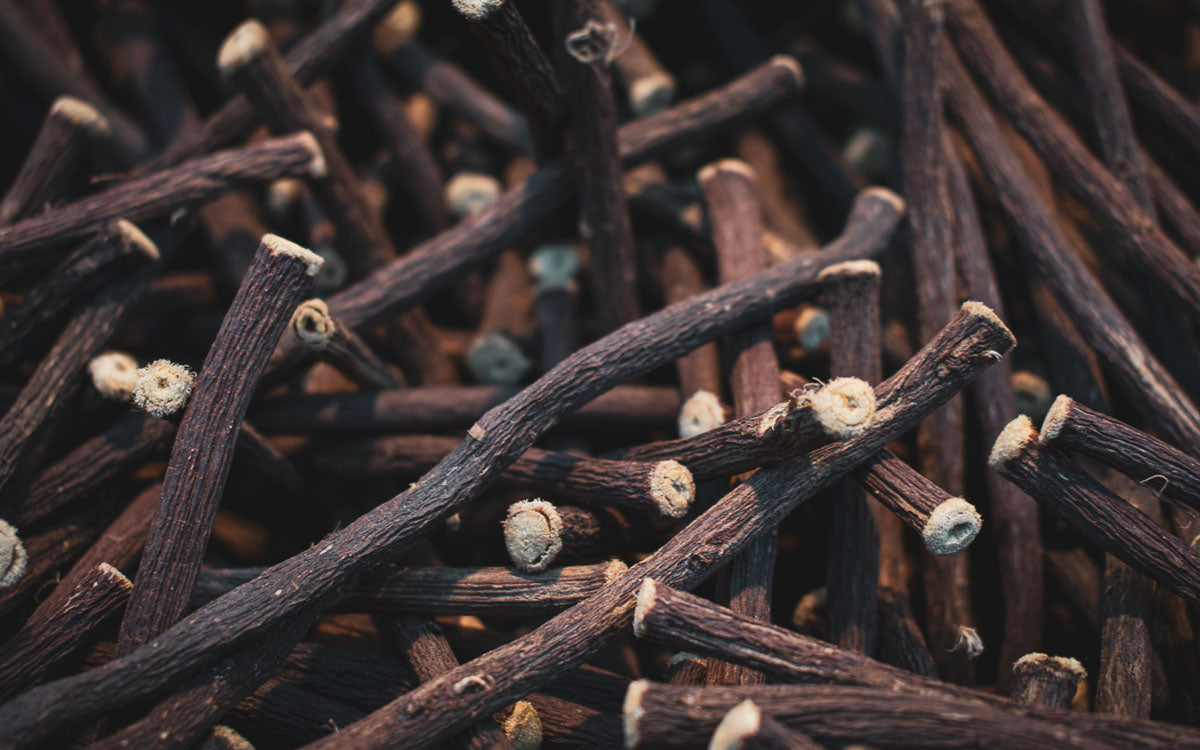
The Role of Licorice Root (Glycyrrhiza glabra)
Licorice root is the foundation of all real black licorice. The plant, Glycyrrhiza glabra, is a legume native to southern Europe and Central Asia. Its thick, woody root contains glycyrrhizin, a compound responsible for licorice's distinctive flavor and its natural sweetness. Glycyrrhizin is around 50 times sweeter than sugar, which is why licorice can taste sweet even with modest sugar content.
To make licorice candy, the dried root is boiled down into a thick, dark, intensely concentrated extract, sometimes called licorice paste or licorice mass. This extract forms the flavour backbone of every piece of real black licorice. The quality, origin, and concentration of the licorice extract are the primary factors determining the quality of the finished candy.
Premium Swedish licorice producers like Haupt Lakrits source high-grade licorice extract and combine it with sugar, starch (for texture), and other flavoring agents to achieve their specific flavour profiles. The result is a product that tastes genuinely of licorice root, not a flavoring designed to approximate it.
Licorice root has been used in food and traditional medicine for over 4,000 years, by ancient Egyptians, in Chinese herbal practice, in European folk medicine, and across the Ottoman Empire. Its trade routes from the Middle East to Northern Europe are part of why Scandinavians developed such a deep relationship with the ingredient.
The Role of Salmiak (Ammonium Chloride)
Salmiak, ammonium chloride (NH₄Cl), is the ingredient that makes Scandinavian licorice unique in the world. It is a naturally occurring mineral salt with a sharp, slightly astringent flavour that enhances and intensifies the earthiness of licorice root in a way that table salt cannot replicate. In Sweden, Finland, Denmark, and the Netherlands, it is a standard candy ingredient. In the rest of the world, it is virtually unknown.
Salmiak is added to licorice in different concentrations to produce different intensity levels, from a barely perceptible edge in mild salty licorice, through medium salmiak that creates a noticeable tingle and sharpness, to extreme salmiak concentrations used in products like Svenskjävlar (Swedish Bastards) that challenge even seasoned Nordic candy lovers.
The salmiak intensity scale runs roughly from 1 (barely present) to 5 (extreme). Haupt Lakrits offers products across this entire spectrum, from Sweet Swedish Bastards (gentle introduction, light salmiak) to Svenskjävlar (the world's saltiest Swedish black licorice, for the dedicated few).
For first-time tasters, salmiak is the most surprising element of Swedish black licorice. The initial reaction varies widely, some people love it immediately, others need two or three encounters before the flavour clicks. The addiction, when it takes hold, is complete.

The Three Main Styles of Swedish Black Licorice
Swedish black licorice is not one thing. It exists across a broad spectrum of styles, each with its own character, audience, and occasion.
Sweet Swedish Licorice
Sweet licorice prioritises the natural sweetness of glycyrrhizin and added sugar, with little or no salmiak. The licorice root flavour is present but soft, accessible to people who are new to real licorice, and to those who simply prefer sweetness over salt. Haupt Lakrits' Sweet Swedish Bastards are the gateway product: genuinely Swedish, genuinely made with real licorice root, but gentle enough for first-timers.
Salty and Salmiak Licorice
The dominant style in Sweden. Salty licorice balances the deep earthy character of licorice root with varying intensities of ammonium chloride, creating a savory, complex candy that can be quietly addictive. This is the style most Swedes grew up eating. Classics include Smålänningar, compact, firm, strongly salmiak, and at the extreme end, Svenskjävlar, which delivers the full salmiak experience without compromise.
Chocolate-Coated Licorice
Swedish confectioners have long understood that the bitterness and saltiness of licorice root is one of the finest complements to chocolate ever discovered. Chocolate-coated Swedish black licorice combines the depth of real licorice with premium chocolate, dark, milk, or white, to create a pairing that surprises even committed chocolate lovers. The salt-chocolate contrast is particularly striking. Haupt Lakrits has built an entire range around this combination, including the award-winning Ultra Violet (white chocolate over salty black licorice) and Hot Swedish Bastards (Carolina Reaper chili licorice in dark chocolate).
Why Sweden Leads the World in Licorice
Sweden consumes more licorice per capita than almost any other country on earth. The average Swede eats approximately 2 kilograms of licorice candy per year. Licorice, called lakrits in Swedish, accounts for around 10% of all candy sold in Sweden, a market share unmatched in any other major candy category.
The reasons are historical as much as cultural. Licorice root entered northern European trade routes in the medieval period, introduced by Arab traders and later by Dutch merchants who brought both the root and the candy-making tradition northward. Scandinavian countries were among the first in Europe to develop large-scale licorice candy production, and the taste became embedded in the culture across generations.
Sweden in particular developed a uniquely sophisticated licorice culture, one that prizes intensity, complexity, and the salmiak edge that most of the world has never encountered. While other countries use licorice as a flavoring agent or a novelty, Swedes treat it as a serious confectionery tradition with deep roots in regional identity.
The Nordic relationship with licorice also reflects a broader cultural appreciation for strong, challenging flavors, the same sensibility that produces fermented herring, aged hard cheeses, and rye bread. Licorice in Sweden is not soft or timid. It demands something from the taster. That is precisely the point.
Read more: Why Do Scandinavians Love Licorice So Much?
How to Choose the Right Swedish Black Licorice for Your Palate
The most common mistake when starting with Swedish black licorice is going straight to the extreme salmiak end of the spectrum. That approach leads to one reaction: "this tastes like cleaning fluid." Start at the gentle end, develop the palate, and let the appreciation grow naturally.
Here is a straightforward guide based on where you are starting from:
If you have never tried real black licorice before: Start with Sweet Swedish Bastards or the Haupt Lakrits best-sellers collection. These are genuine Swedish black licorice made with real licorice root, but with sweetness in the foreground and salmiak in the background.
If you already enjoy American black licorice: You are ready for a real salty licorice experience. Try Smålänningar or Chilla Gunilla, both deliver authentic salmiak character without reaching extreme intensity.
If you love strong flavors and want the full experience: Go directly to Svenskjävlar. The world's saltiest Swedish black licorice is not for the faint-hearted, but for those who want to understand why Swedes are obsessed with this candy, this is the answer.
If you prefer chocolate: The chocolate-coated licorice range is an excellent entry point. The chocolate softens and balances the licorice intensity while letting the real licorice root flavor come through. Ultra Violet, white chocolate over salty black licorice, consistently converts skeptics.
Full guide: How to Introduce Someone to Swedish Black Licorice

Haupt Lakrits: Swedish Black Licorice from Stockholm, USA
Haupt Lakrits was founded in Stockholm, Sweden, and is now available across the United States at hauptlakrits.us. Every product is made using real licorice root extract and real salmiak, no artificial flavoring, no shortcuts.
The range covers the full spectrum of Swedish black licorice styles:
- The pure licorice range, shop all licorice, from the gentle Sweet Swedish Bastards to the uncompromising Svenskjävlar
- Chocolate-coated licorice, shop chocolate licorice, including the award-winning Ultra Violet, Nice Mint, Naughty Ginger, and The Salted Caramel
- Limited editions including Hot Swedish Bastards, Carolina Reaper chili meets Swedish black licorice in dark chocolate
- Gift bundles, shop bundles, curated sets for every taste profile, from sweet introductions to full salmiak challenges
- Dietary options, gluten-free licorice and vegan licorice options available
All products ship across the United States.
Frequently Asked Questions About Swedish Black Licorice
Is it liquorice or licorice?
Both spellings are correct, they refer to the same plant and the same candy. "Licorice" is the standard spelling in American English and is used throughout the United States. "Liquorice" is the standard British English spelling, used in the UK and Australia. The Swedish word is lakrits, which is more closely related to the original Latin liquiritia (from the Greek glukurrhiza, meaning "sweet root"). On this site we use the American spelling, licorice.
Is black licorice the only real licorice?
Yes, if the candy contains actual licorice root extract, it will be black or very dark brown. That dark colour comes from the concentrated licorice root extract itself. Red licorice (Twizzlers, Red Vines) contains no licorice root at all, it is artificially flavored candy in a licorice shape. Strawberry licorice is not licorice. Black licorice made with real extract is the only authentic form of the product.
Is Twizzlers black licorice real licorice?
Twizzlers Black contains anise oil rather than genuine licorice root extract. Anise oil has a similar aroma to licorice but comes from a completely different plant (Pimpinella anisum). By the ingredient definition, Twizzlers Black is not real licorice, it is anise-flavored candy. The flavour difference is noticeable to anyone who has tasted the real thing.
Is Good & Plenty real licorice?
Good & Plenty contains licorice extract as an ingredient, which places it closer to real licorice than Twizzlers. However, it uses a very mild concentration of licorice alongside artificial flavoring, the result is significantly less intense and less complex than Swedish black licorice made with high-quality extract. It is closer to real licorice than most American candy, but it is a pale shadow of the genuine article.
Why is black licorice so gross?
It is not, but it requires context. Most negative first reactions to black licorice in the United States are actually reactions to anise-flavored American licorice, or to extreme salmiak products that are genuinely challenging even for experienced tasters. Real Swedish black licorice, approached from the sweet end of the spectrum, converts a high proportion of skeptics. The flavor is unusual by American candy standards, but "unusual" is not the same as "bad." Start with Sweet Swedish Bastards or the chocolate-coated range and form your own opinion.
Who actually likes black licorice?
Around 500 million people across Scandinavia, the Netherlands, Germany, and parts of the UK, Australia, and New Zealand consume black licorice regularly. In Sweden alone, the candy market is worth hundreds of millions of dollars annually, with licorice holding roughly 10% market share. Within Sweden, the more important question is who does not like licorice, it is a small minority. Globally, black licorice is not a niche taste. It is the dominant candy culture of Northern Europe, with a fast-growing audience in the United States as premium Swedish and Dutch imports become more widely available.
What country eats the most licorice?
Finland and Sweden consistently top the charts for per-capita licorice consumption, with Finland typically first and Sweden second. Finland averages approximately 3 kilograms of licorice per person per year. Sweden averages around 2 kilograms. The Netherlands also ranks exceptionally high. By comparison, average licorice consumption in the United States is well under 0.5 kilograms per person per year, leaving significant room for growth as real Swedish and Dutch licorice becomes better known.
What is licorice known for?
Licorice root is known for its intense, distinctive flavor, earthy, bittersweet, slightly anise-like, and for its historical use across multiple ancient civilizations as both a food and a traditional medicinal ingredient. As a candy, black licorice is known globally as the defining sweet of Scandinavian culture and as the candy that most sharply divides opinion. In Sweden, it is simply known as the nation's favorite candy.